

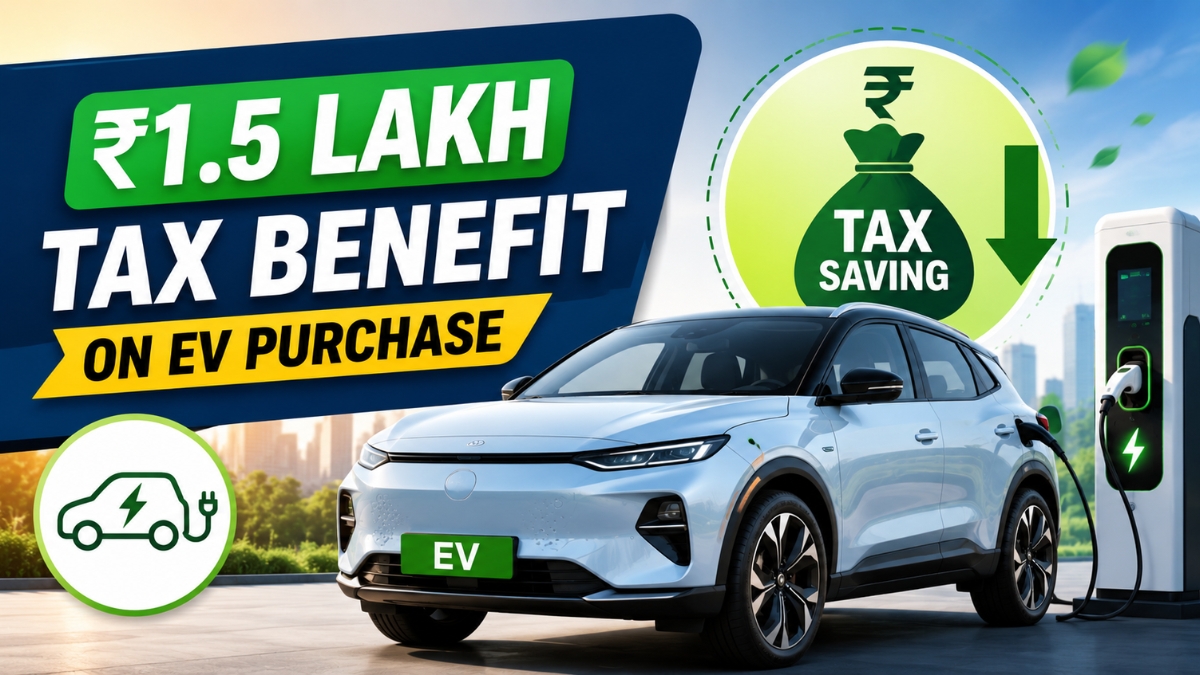
EV Buyers Can Get a Great Tax Break! With Who Can Claim, you can claim income tax benefits up to ₹1.5 lakh for your income. The adoption of electric vehicles is gaining traction in India, not only for fuel savings, but for other reasons as well.
The good news for those planning to buy an electric car is that they can avail of an income tax benefit of up to ₹1.5 lakh, under specific conditions.
This tax incentive could be a compelling reason to choose an EV, as it becomes a more popular choice in the growing trend of clean mobility and the increasing focus on EVs by governments.
EV Buyers
| Feature | Details |
|---|---|
| Article Topic | EV Tax Benefit for Buyers |
| Focus Keyword | Electric Vehicle |
| Tax Deduction Section | Section 80EEB |
| Maximum Deduction | Up to ₹1.5 Lakh |
| Benefit Type | Income Tax Deduction on Loan Interest |
| Eligible Applicants | Individual Taxpayers |
| Loan Requirement | Loan from a Recognized Financial Institution or NBFC |
| Applicable On | Interest Paid on Electric Vehicle Loan |
| Main Advantage | Reduces Overall Cost of EV Ownership |
| Category | Electric Vehicle News |
The government provides tax incentives for EV why?
The government provides tax benefits on EVs, why? The Indian government has been promoting the adoption of EVs in the country. Beyond its pollution reduction benefits, EVs can help decrease reliance on fossil fuels in the country.
In response to this, the government implemented a tax benefit that encourages people to fund buying an electric car with a loan. This can help to lower the total cost of owning an EV and help to manage monthly repayments.
What is the tax deduction of ₹1.5 lakh?
According to the provisions of Section 80EEB of the Income Tax Act, any taxpayer may claim a deduction of up to ₹1.5 lakh on the interest paid on an electric vehicle loan.
In addition to a number of other tax savings, this deduction can be claimed by EV owners, adding up to a significant incentive.
The deduction does not cover the principal amount of the loan, but rather the interest. The real savings of tax will vary as per the income tax slab.
Who Is Eligible for This Benefit?
This deduction isn’t available to everyone. Some requirements have to be met for the benefit to be paid. The deduction is only for individual taxpayers. It is not eligible for companies, partnership firms and other entities.
The loan should be availed from a recognized financial institution or a Registered Non-banking Financial Company (NBFC). Further, the loan should be specifically for an electric vehicle. The vehicle to be purchased should be an electric car that can use only an electric motor to move and receives its power from a rechargeable battery.
How Much Can You Save If You Can?
The limit of the deduction is ₹1.5 lakh, but the tax saving depends on your tax bracket. For instance, if you are in a higher income tax bracket, you may see significant savings on an annual basis. This can be a tremendous cost savings over the term of the loan.
This tax break is another incentive that many middle class car buyers should think about when deciding on an EV versus a car.
India is witnessing continued growth in EV adoption.Adoption of EVs continues in India.
The EV market in India has seen robust growth in last few years. Improvements in charging infrastructure, battery technology and the variety of models available have helped to make EVs a more attractive option to buyers.
In parallel, increased subsidies at the state level and income tax deductions have made EVs more affordable than ever.
With growing awareness, such tax benefits as Section 80EEB will be crucial in driving EV adoption in the country.
Disclaimer: The information contained in this article is for informational purposes only. The tax rules and eligibility criteria may be subject to change. Any tax or financial decision must be made with the advice and guidance of a qualified tax or financial advisor.
Also read:
Tesla Model Y Gets ₹9 Lakh Cheaper, Premium EV Segment Heats Up in India
Tata Tiago EV Vs MG Comet EV: Which Budget Electric Car Delivers More Value In 2026?