
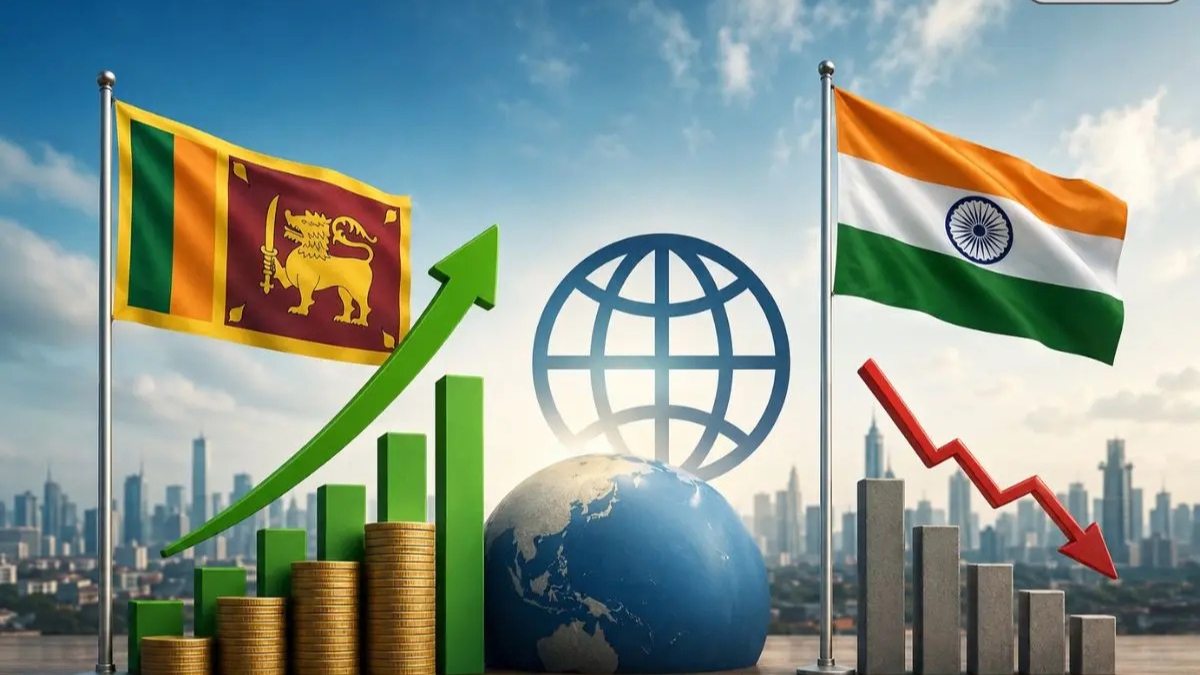
How Indonesia beat India in the World Bank Rankings from Bankruptcy Risk to Global Success, Upper-Middle Income Economy Over the past decades, the economic trajectory of Indonesia has been among the most amazing in the world.
After becoming on the brink of fiscal disaster during the Asian Financial Crisis, the nation grappled with high inflation, currency debasement, unemployment and a major banking crisis. At one time, economists were worried about possible long-term financial instability in Indonesia if substantial changes were not made. But it’s a different story these days.
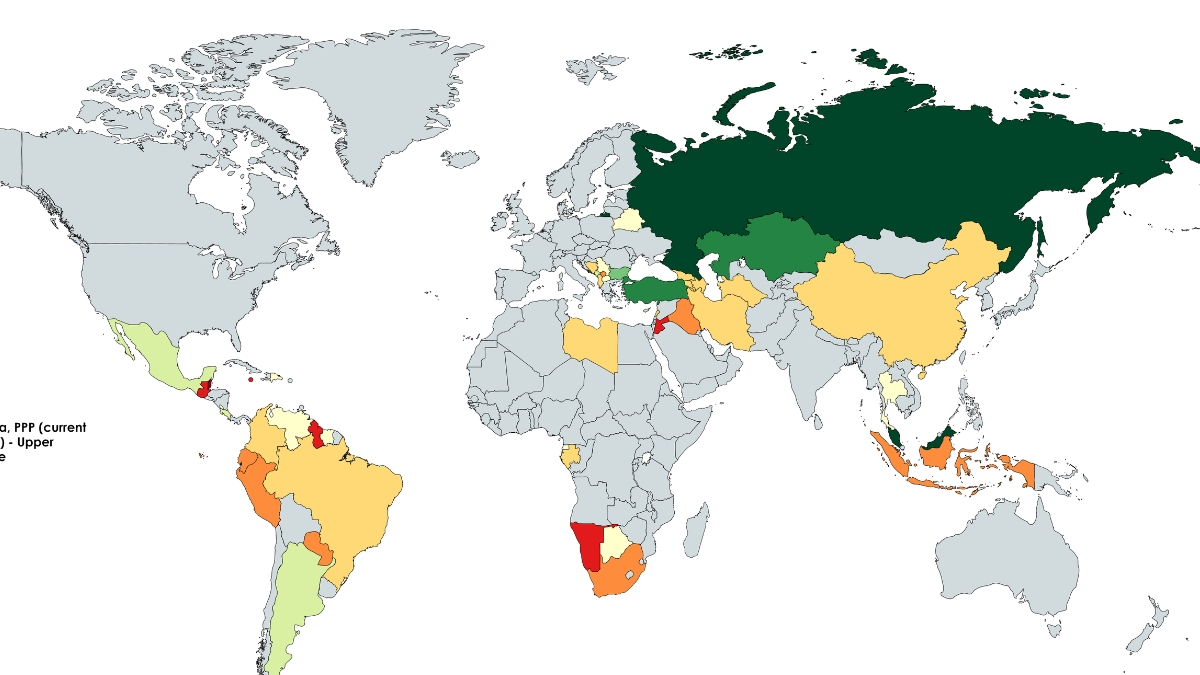
Even though India is one of the fastest-growing large economies in the world, the country has yet to be classified in the Upper-Middle Income Economy category as Indonesia has done. Again, the latest World Bank report has been pointing out that the size of an economy is not what it makes of it.
Rather, it is based on Gross National Income (GNI) per capita, the average income per person. Despite its larger economy in terms of GDP, Indonesia is a country that has accomplished what is considered the “Upper-Middle Income Economy” threshold, thanks to economic reforms that have been implemented over the years and increased average income.
How Indonesia is becoming an upper middle class economy
Indonesia’s success is not a one-night occurrence. The nation required an economic recovery program that would take almost 20 years, following the devastating Asian Financial Crisis of 1997-98. In that time, the value of the Indonesian currency decreased significantly, inflation broke out rapidly, businesses closed, and millions of citizens fell into poverty and unemployment. The crisis compelled the government to go through substantial structural changes, which paved the way for future growth.
Throughout the years, the Indonesian government has poured a lot of resources into roads, ports, airports, industrial and digital infrastructure. The government also introduced fiscal discipline, expanded the banking system, established foreign investment laws and regulations, and encouraged manufacturing. The reforms led to a gradual rise in productivity and income in the country. This has positioned Indonesia as a UMIE (Upper Middle Income Economy) and placed it on the list of the strongest economies in Southeast Asia.
Understanding the World Bank Income Classification
The World Bank categorizes countries into four income groups every year by using its Gross National Income (GNI) per capita according to the Atlas Method. There are four classes: Low Income, Lower-Middle Income, Upper-Middle Income, and High-Income Economies. This is because this system is used to compare the average income per citizen, not the total size of an economy.
Even if a country has the largest GDP in the world, but its average income per person is still less than the required income, it will still be in a lower income category. That’s why India’s classification is different from Indonesia’s, despite the fact that India has a much bigger economy.
Why India Is Still Behind
India has been and continues to have remarkable economic growth and is one of the fastest-growing major economies in the world. The country has advanced tremendously in many areas including digital payments, technology, infrastructure, manufacturing, renewable energy and startup innovation. Governments’ initiatives like the Digital India, Make in India, Startup India, PM Gati Shakti India, and the Production Linked Incentive (PLI) scheme are likely to provide further boost to economic growth.
But India’s population exceeds 1.4 billion which has a significant impact on its GNI per capita. The nation’s GDP is still growing at a rapid pace but overall incomes per person are still too low to be considered an Upper-Middle Income Economy. Average earnings are also affected by income inequality, regional differences, rates of informal employment, and rural poverty rates.
What Helped Indonesia Achieve Faster Income Growth
The economy of Indonesia was oriented towards long-term development, not short-term. The government encouraged manufacturing, promoted exports, supported logistics, and supported investment in mining, electric vehicle supply chains, tourism and digital technology, etc. The country also had a strong export of natural resources such as nickel, coal, palm oil and other exports, as well as investing in value added industries apart from natural resource exportation.
Government’s initiatives in the financial sector strengthened the confidence of investors, and the sound monetary policies contributed to the economic stability in the face of global uncertainties. Economic performance was also bolstered by better tax collection, investment in infrastructure and pro-business policies. These collaborative efforts slowly ticked up average income over time until the nation was able to meet the world bank’s definition of an Upper-Middle Income Economy.
The Long-Term Potential of India is still good
India is not yet in the Upper-Middle Income category but the economic outlook is highly promising. In the near future, India is projected to be the third biggest economy in the world with respect to the GDP. The nation boasts a young labor force, a fast-growing digital economy, rising foreign investments and rising manufacturing capabilities.
Experts say that the average income will keep on increasing steadily if India can create quality jobs, boost the productivity, enhance education and healthcare infrastructure, boost export and expand industrial output. As this improvement rolls across the urban and rural areas, India could become an Upper Middle Income Economy in the future.
The UMES is more than just GDP
The new World Bank classification is a reminder that the economic development of a nation involves not only its economy’s size, but also the extent to which income is distributed to ordinary citizens. The transition of Indonesia from a Low-Middle Income economy into a Upper-Middle Income Economy is a result of decades of continuous reforms, investments in infrastructures, development of industry, and good economic management.

The challenge is different in India. One of the world’s largest populations necessitates high growth rates over a number of years combined with inclusive development to ensure that per capita income rises. While the classification of this country remains the same, the investments that are still being made in its infrastructure, manufacturing, technology and human capital suggest that progress continues.
Disclaimer: The figures in this article are based on the latest World Bank classification of income levels and economic data that is openly available. The World Bank classifies incomes as per the estimates of Gross National Income (GNI) per capita and may be revised in future releases.
Also read: